Client Overview
- Client: Global manufacturer, Fortune 500 Tier-1 supplier
- Scope: Approximately 2,000 legacy nozzle engineering drawings
- Data per drawing: Approximately 40 key dimensions, across multiple drawing variants and views
- Output: Structured Excel database of extracted dimensions, tolerances, and metadata
Engineering drawings hold critical information: dimensions, tolerances, parts lists, materials,
safety notes, and manufacturing parameters. Most of this data sits inside Portable Document
Format (PDF) files, images, or legacy computer-aided design (CAD) exports, where it stays locked
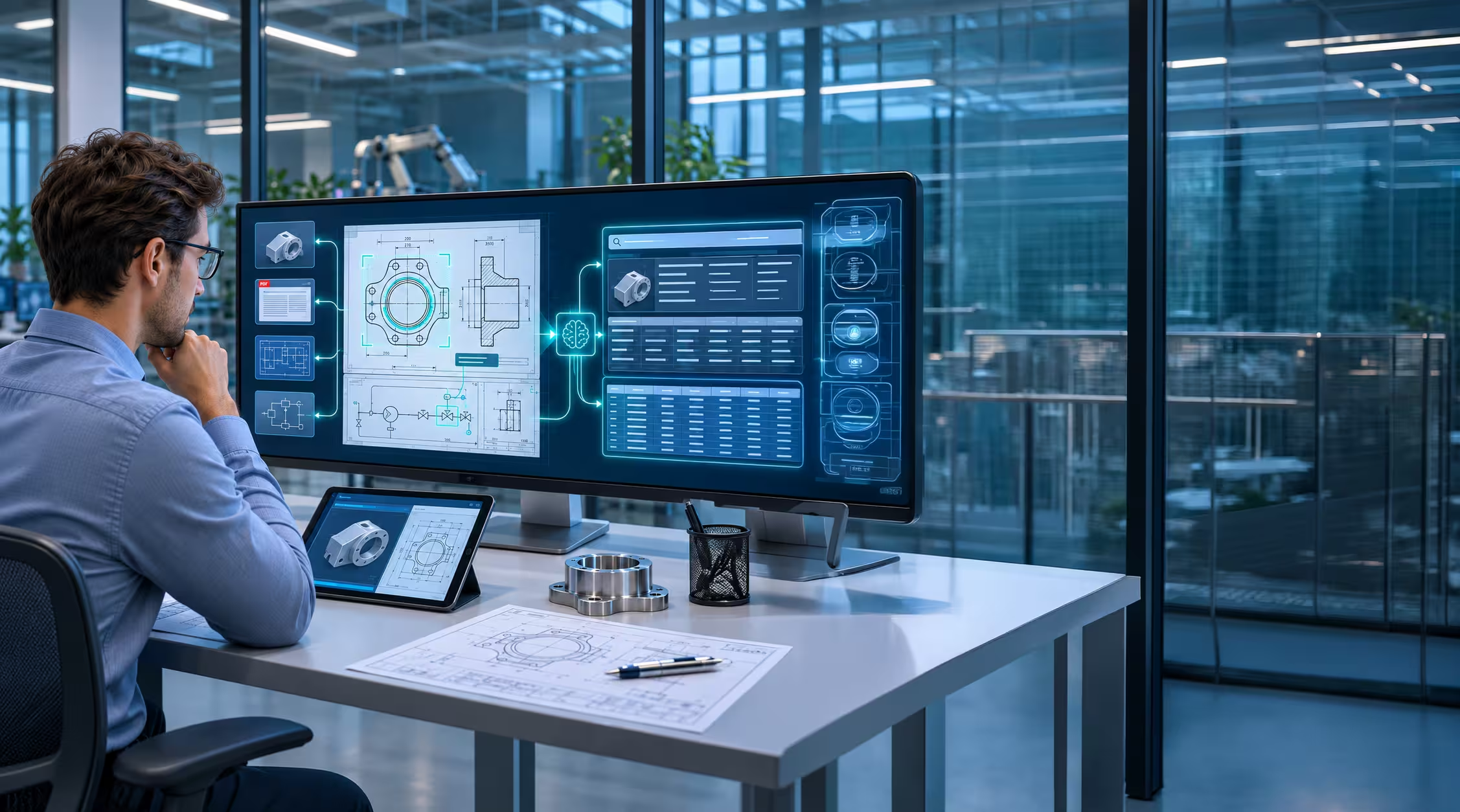
in a format that cannot be searched. A Fortune 500 Tier-1 manufacturer partnered with Intuceo to
convert decades of nozzle engineering drawings into structured data. The goal was to automate
the extraction of dimensions and metadata that engineers had previously logged by hand.
The Challenge
Manual extraction from engineering drawings is slow, error-prone, and difficult to scale across
manufacturing, quality, and maintenance workflows.
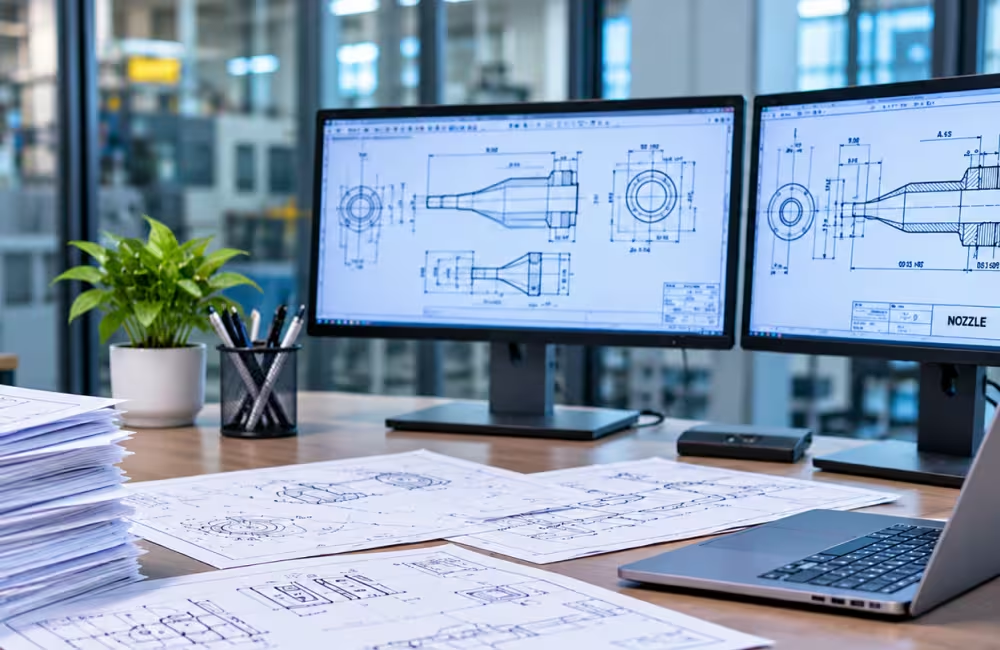
For this client, the problem was concentrated in an archive of approximately 2,000 legacy
drawings, most of them scanned PDFs. Each drawing carried around 40 key dimensions, and
the archive included multiple variants and views of the same designs. Because the data existed
only in drawing form, engineers had no practical way to confirm whether a particular nozzle
design already existed or to compare one revision against another.
The Solution
Intuceo applied Vision AI, optical character recognition (OCR), natural language processing
(NLP), and large language model (LLM)-based engineering models to extract structured
information automatically from engineering documents. The approach supports:
- Mechanical drawings (2D)
- Electrical schematics
- Piping and instrumentation diagrams (P&ID)
- CAD exports: DWG, Drawing Exchange Format (DXF), and Standard for the Exchange of Product Model Data (STEP) files rendered to PDF
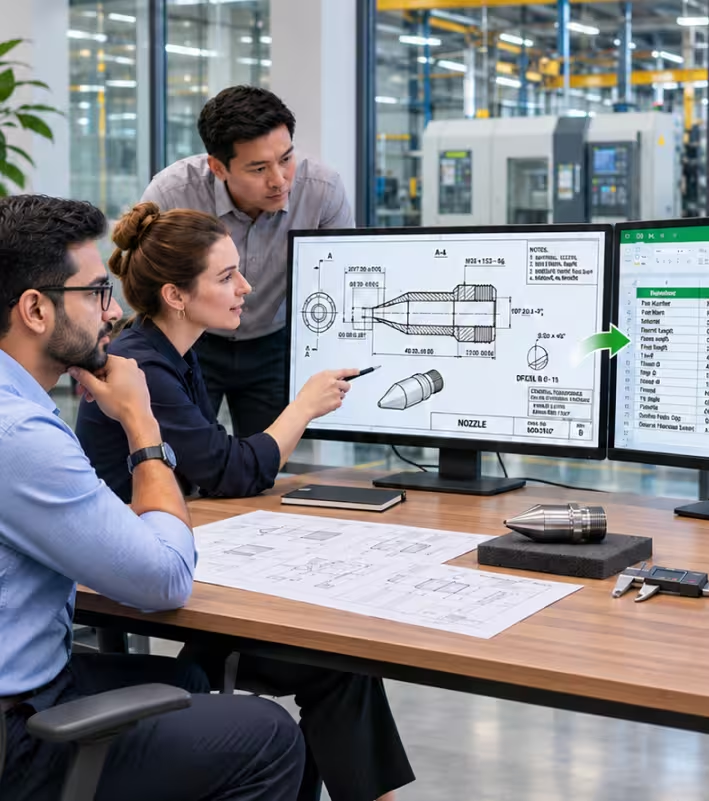
For this client, Intuceo ingested the full drawing set, including scanned images and CAD
exports. OCR captured the text on each drawing, and vision models interpreted the drawing
geometry. The extraction covered part numbers, nozzle hole counts, every dimension and
tolerance, and the table data inside the drawings.
Tech Stack
Vision AI and computer
vision models
Interpretation of drawing geometry
OCR
Text capture from scanned drawings and
CAD exports
NLP and LLM-based
engineering models
Extraction and structuring of engineering
information
Custom validation rules with
human-in-the-loop review
Accuracy checks on critical values
Excel
Output database for the extracted data
Implementation Approach
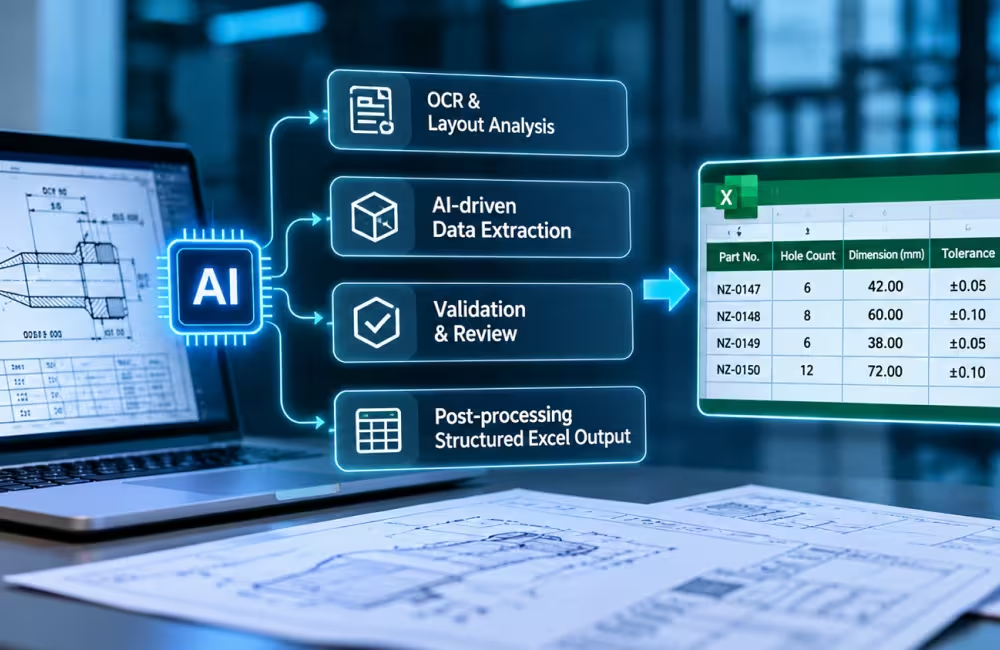
- OCR and layout analysis: Text was read from each drawing and the drawing layout analyzed
- AI-driven data extraction: Vision models interpreted drawing geometry alongside the OCR output to pull part numbers, hole counts, dimensions, tolerances, and table data
- Validation against expected ranges: Custom validation rules checked the extracted values, and human-in-the-loop reviews confirmed accuracy for critical values
- Post-processing: Validated data was structured and written to an Excel database
Results
Before the project, the client’s nozzle drawings could only be read by
opening and tracing each file. The archive is now held as structured
data in an Excel database. Dimensions and metadata that engineers
once logged by hand are captured automatically, and critical values
pass through rule-based checks and human review before they enter
the database.
Business Outcomes
- Faster engineering and manufacturing workflows: Drawing data is captured automatically instead of through manual tracing
- Automated data capture for downstream systems: Extracted data can feed enterprise resource planning (ERP), product lifecycle management (PLM), manufacturing execution system (MES), quality management system (QMS), and computerized maintenance management system (CMMS) workflows
See how drawing extraction applies to your engineering data
Whether your archive holds scanned PDFs, schematics, or CAD exports, we can map the
data you need and how it reaches your engineering systems.